Tuesday, November 17, 2015

Prompt #5- Observing a Community

By: Katie Nagy

             A lot of people with law degrees end up going into a profession that may not include practicing law, but are still related. A common job after getting a law degree is the field of negotiations. People with law degrees have the skills to work as mediators, negotiators, and even jobs in international relations. I Interviewed a college freshman named Natalie about the Model United Nations (MUN) club she is a member of at her campus, and found out a lot of interesting information about the MUN club:
           
            “One of the interesting thing about being in MUN and going to the meetings is you realize the different ways that debate is used, so the actual debate topics are things like IP legislation vs. government transparency, so you have these complex topics that are not easy to discuss in any way, especially in a small amount of time. During the actual meetings of the club, the way we use the debates is in a comedic sense. The benefit of these comedic debates is if you are allowed to answer a funny prompt or question in front of people, then it is easier to talk in front of a crowd when you are answering a serious question. During debates, you are allowed to pass notes to each other and assist your other members, but a lot of the debates are impromptu and you may discuss a topic before a debate, but most of the talking done has been come up with on the spot. Additionally, something I like about going to the conferences for the MUN club is you are allowed to see many different sides of people, and in particular you can spend 4 days discussing IP legislation and other difficult topics that are debated by very intelligent people."


       Along with the intelligent debates at MUN, Natalie also loves the experiences in her club. Natalie states about the club, "One thing I love about MUN is the energy associated with it, you sit in a car to a conference for 10 hours and then you bond with everyone you are working with and you are put in committees together and you become so close with so many people after four days. You can see the solidarity and relationships that exist. In a committee, there are blocks or groups of countries that align together and make resolutions and in the clubs there are blocks depending on gender, e-board, etc. and it is very interesting to see the way that works and how everyone works together. Everyone in the club pulls their own weight, and everybody is seen as equals."
           
           After the interview with Natalie, perhaps the most surprising information I learned from her was the solidarity in the Model United Nations club. Lawyers are seen as sharks that debate and fight for the win by themselves, but in Model United Nations, the whole club has to work together and has a common goal in mind. With lawyers, everyone at a firm has to rely on someone else for help and everyone has to work together for the firm to succeed. The Model United Nations club is a great stepping-stone for a future lawyer.

International Relations Club. Digital image. Web.wm. The College of
       William and Mary, n.d. Web. 17 Nov. 2015.

Friday, November 13, 2015

Prompt #3 : Exploring Communication


       For this post, I get the opportunity to interview my professor that teach Intermediate Macroeconomics. I get to know more about communication style used by him and other economists. The first question that I asked him is about the common misconceptions in field of economics. He said that some researchers use a lot of mathematical definitions and proofs to explain the economic relationships that they are describing. Other researchers don't like to use as much formality, and prefer less rigorous descriptions of economic relationships.

        A common mistake is to use one approach without the other. Often we can understand an economic relationship from a story or a graph, but using more rigorous mathematical or logical reasoning helps us to make sure that we don't make mistakes. Another mistake researchers make is to just look for statistical relationships in the data without trying to understand the economic theory behind the relationship.

       Besides, he explained that he try to use a variety of methods of communicating and give a clear verbal description of whatever theory or model in class, which is usually the most difficult part. In some cases, there is a "real world" story or example of the theory, like when he talked to his students about Ford or Costco paying an efficiency wage. Real world examples are good because they help people to understand the theory or model, and because they show people that the theory or model is actually relevant, because they show that the theory or model accurately describes the real world.

       Finally, if there is a good graph or simple mathematical example that demonstrates the model, he like to either project that on the screen or work through it on the blackboard. Working through on the blackboard or document camera is preferable, because then students can see the process or the steps that he take in working through the logic of the model.

       Other than that, he stated that in daily life he usually talking to one person or a small group of people. Basically he know those people, know what they know, and can tell from their facial expressions and from their responses to what he say whether they understand him or not. In a classroom, it is much more difficult to see whether the audience understands what he says. He also don't know what background knowledge students have.


       In economics, theories that they learn in one course build on theories that they have learned in previous courses. If he assumed that students already understand some background material when he described current material and students don't have the background that he assumed, then they will get lost. So, he need to be more explicit about what he assumed when explaining a concept and need to be more careful in ensuring that students understand to what he said.

       In economics, they work with a lot of formal mathematical models. Either they try to prove that some result follows from the assumptions of these models, or they try to use data to estimate the relationships between the variables in these models. In his research, he generally using data from a specific setting, like data on taxes and borrowing by cities and other local governments. So he try to also give a good description of the laws and institutions in that setting before he begin.

       Then, he will describe the relationships between variables that economic theory predicts will hold, the model that he used to measure those relationships. Finally, he describe the statistical results that he find. In writing he need to be careful to describe exactly what statistical or mathematical results that have discovered, and show the audience that the results are interesting and important, without exaggerating those results.

        In writing academic papers, he usually try to be clear and concise in what to say, rather than use a lot of clever or entertaining phrases. There are a lot of very skilled researchers who do not have great writing or speaking skills. Thus, it can be a big advantage to have good communication skills. Also, it is useful, even in formal academic papers and presentations, to use stories or simple examples to demonstrate the basic idea of a theory or model. Hence, I hope that this explanation can give you more information about how the communications style used by economists.

Thank you.

By: Syarah Alya

Tuesday, November 10, 2015

What to Expect Your First Year in Law School


      Listening to Kayla Marie’s perspective on her first year in law school made me completely nervous about attending law school myself. From her point of view, law school was completely different than her undergraduate education, she actually compared it to The Hunger Games since everyone was essentially competing against each other. She expressed that her first year was a roller coaster of emotions since she felt both discouraged and inspired on a daily basis.

      Kayla also discussed the changes in her personal life and how she had to give up a lot of things she loved to focus on her studies. What stuck out to me the most from this video was when Kayla described law school as a sacrifice, the point she brought up specifically was that if people are your true friends they are going to support the fact that you don’t have as much time to spend with them as you used to. As someone who wants to maintain a social life and close friendships while I am in law school, hearing this kind of saddened me even though I already knew that going to law school would probably strain some of my relationships.

      Though everyone’s experience in law school is going to differ, I think it is important to go out and learn as many people’s perspectives as possible because you can never be too prepared about your future. Nobody ever said law school was going to easy, in fact everybody warns you that its going to be a difficult uphill battle. Perhaps I am being overly optimistic, but I really believe I have what it takes to overcome the obstacles law school throws at me, I just hope the end justifies the means.


By: Jasmine Shafquat

Law School Meme. Digital image. N.p., n.d. Web. 18 Nov. 2015.

"My Law School Experience: First Year Q&A!" YouTube. YouTube, n.d. Web. 10 Nov. 2015.

Typical Workday of a Lawyer

By: Katie Nagy


             Everybody knows the typical “9 to 5” workday of adults, but what is the workday like for a lawyer?

 When you are new at a firm, you often have to prove your worth to others; so many new employees work many more hours a week than the people who have been there for more than 15 years. The type of firm you work at also affects your hours; a smaller firm will work employees maybe 40-50 hours, but at a big firm, new employees can expect to work 60-70 hour weeks (A day in the life para. 2). Goodbye, free time.

In the article I read, the writer describes the workday of a lawyer in 4 words- research, writing, studying, and phone calls. Lawyers have to study the details of a case, research old cases for precedent, and take notes on everything they learn (A day in the life para. 5).  It seems that in order to win a case, lawyers have to use every resource available to them in order to win. Lawyers write memos, briefs, emails, etc (A day in the life para. 6). Lawyers communicate for a living, and it is also essential that they communicate within the law firm.  Many people associate studying with only law school, but lawyers have to prepare for a meeting or a case by studying for hours on the information they have researched (A day in the life para.7). Studying is a necessary evil in the field of law. Lawyers will also be on the phone with clients, bosses, opposing lawyers, etc. (A day in the life para. 8). While lawyers write a lot as means of communication, the phone is another way lawyers communicate, whether it is with a client or their boss. Looking from the outside in, it seems that there is not much free time in the workday of a lawyer.


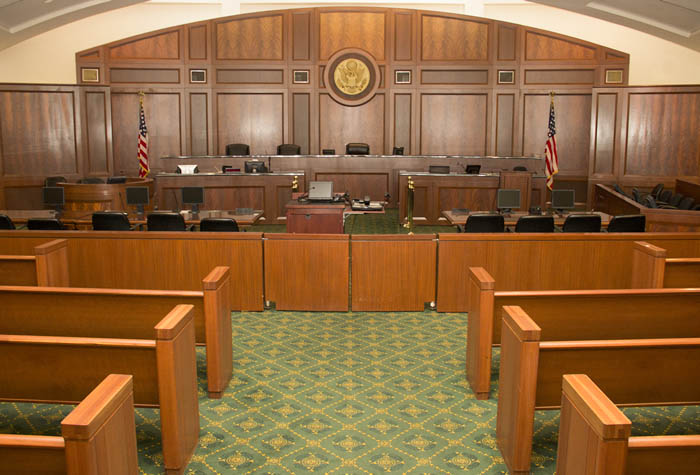
               Another small part of a lawyer’s workday is court appearances and client meetings. While many people think that lawyers spend their whole workday in a courtroom, the opposite is true. Lawyers spend the least amount of their time in the courtroom (A day in the life para. 9) Lawyers also differ on how much time they spend with their clients, but weekly meetings with clients are common in order to keep both parties on the same page (A day in the life para. 10). While many people picture lawyers spending every day in the courtroom arguing with the opposing side, or in a dim lit room speaking with their client, it is clear that the workday of a lawyer is not as dramatic as it is often portrayed. Lawyers spend a lot of time in their offices working hard whether it be researching old cases or studying for a court case.


"A Day in the Life of a Lawyer." Acelsat. ACE, n.d. Web. 10 Nov. 2015.

Federal Courtroom. Digital image. Justice. U.S. Department of
        Justice, 27 Dec. 2014. Web. 10 Nov. 2015.

South Hope Law Office. Digital image. JohnMartin. John A. Martin &    
       Associates, n.d. Web. 10 Nov.  2015.

Friday, November 6, 2015

Blog Prompt Post #4: Considering Delivery and Style

 
  With the ever-continuing expansion of technology, a plethora of data has become readily available for those seeking to learn about their field in depth. A person can now access information that until recently was only available to professionals in that sector. As a result, I wanted to see how much insight I could actually gain about sexism in the legal profession by looking at various articles on the internet and comparing which sources were the most helpful.


    I began my research with a scholarly article from the American Bar Association titled, Sex Discrimination in the Legal Profession. This article was very research based and discussed the most common forms of sex discrimination. I became highly informed and shocked at the things I learned, for instance many top law schools actually admit to scrutinizing women applicants harder than men (Dinerman 1).

    I continued my investigation with an article from Ms.JD, which is a nonprofit organization that dedicates its success to aspiring and early career women lawyers. The post I focused on was titled, What No One Tells You Before You Go to Law School: You’re Entering a Sexist Profession and it described a woman’s experience with sexism in the legal environment. The post was both personal and informative, it gave specific details of her encounters of being treated unequally as well as referenced statistics from Yale Law.

    In terms of reliability, obviously the article from the American Bar Association contains the least amount of bias since it focuses on fact based research. Although I gained a lot of knowledge from this piece, analyzing it was mind numbingly dull since it was meant to be read by peers in that profession. On the other hand, the Ms. JD blog was a pretty enjoyable read for me since I am basically their target audience and it allowed me to obtain a new understanding from one person’s perspective.

    There are pros and cons to each source and at the end of the day they both educated me on my desired topic. If you are doing actual fieldwork, I would suggest using google scholar or a library database to get accurate information. Aside from that, legal journals and blogs are great sources too because they give you a summarized version of those scholarly articles mixed with an opinion, which can be helpful.

By: Jasmine Shafquat


American Bar Association Logo. Digital image. Ms. JD. ABA, n.d. Web. 06 Nov. 2015

Dinerman, Beatrice. “Sex Discrimination in the Legal Profession”. American Bar Association Journal 55.10 (1969): 951–954. Web..

Monahan, Alison. "What No One Tells You Before You Go to Law School: You’re Entering a Sexist Profession." Ms. JD. N.p., n.d. Web. 06 Nov. 2015

MS. JD Logo. Digital image. Ms. JD. N.p., n.d. Web. 6 Nov. 2015.

Thursday, November 5, 2015

Economic concepts that economics graduates should know!


       Economics has an impact on every moment of our lives. Basically, we need to think economically when making decision whether can benefit us in the future or not. Hence, an understanding of economics is vital to our lives. Now, we will discuss some economic concepts.

1) Scarcity
Everyone has their own preference. Therefore, problem such as scarcity arises because people have unlimited wants but resources are limited. Because of scarcity, various economic decisions must be made to allocate resources efficiently.

2) Supply and Demand
Let say that people need to have winter clothes since winter season is coming. Thus, the demand for winter clothes increase and firms will supply more because firms can gain more profits. Because of that, a lot of firms start making winter clothes and after a few production cycles, the price of winter clothes will plummet. Hence, people will demand for clothes that suitable for spring season and again, firms will compete to sell and produce more clothes for spring collection.


3) Costs and Benefits
In any situation, consumers will decide to buy products that benefits them. Besides, they are willing to pay for the products that less costs but in good quality. Producers also will make the same decision. They will produce products that can benefits them means that they can get a lot of profits by selling the products. Thus, producers will always produce products that are highly demanded and less costs.

       In conclusion, I hope that everyone can understand some economic concepts that mentioned above and try to relate it when making any decision. Ask yourself whether the decision can provide incentives to you or do the products give you satisfaction. By that, I think you will not regret of the choice that you make. To be master in economics, you should know the basic language of economics and thus you can imply when working as an economist.
Thank You


Andrew Beattie, "5 Economic Concepts Consumers Need To Know",  http://www.investopedia.com/articles/economics/11/five-economic-concepts-need-to-know.asp


Monday, November 2, 2015

Clothing in the Courtroom

By: Katie Nagy


        It seems that certain professions have a “uniform” that comes to mind when you think of the apparel people in that field wear. Doctors and nurses wear scrubs, pharmacists wear lab coats, construction workers wear bright vests, etc., but what do lawyers wear? Or maybe the right question is what should lawyers wear at a formal event like a trial or a meeting with a client? I investigated the do’s and don’ts of lawyers’ outfits, and came to this conclusion:

Dos for formal wear-
  •    Men should always wear a suit (Hill para. 12)
  •    Suits must be tailored and fit well (Hill para. 12)
  •    Men should be clean-shaven (Hill para. 13)
  •    Women may wear a suit, dress, or skirt (Hill para. 14)
  •   Women should wear flats (Hill para. 15)
  •    Women should wear pantyhose if wearing a skirt (Hill para. 16)
Don’ts for formal wear-
  •       Men cannot wear a dark suit and dark shirt together (Hill para. 12)
  •       Women should not wear their hair in a ponytail (Hill para. 16)
  •       Bra straps should never be showing (Hill para. 14)
  •       Women should not wear a lot of jewelry (Hill para. 16)
  •       Women should not wear a lot of make-up (Hill para. 16)
  •       Women should not wear revealing clothes (Hill para. 16)
  •       Women should not wear tight-fitting clothes (Hill para. 16)

      While most of these guidelines for lawyers’ clothes in formal events do not surprise me very much, I was interested to notice that there are many more rules regarding what women should wear than for men. The rules for what male lawyers should wear seem pretty standard for a lot of jobs, wear a suit that fits you and don’t have a long beard on your face, but the rules for women are much more strict about what one should wear. 

      One thing that actually upset me when reading the clothing tip for lawyers was the reasons behind some of the rules for women. Female lawyers were advised not to wear too much make-up because their looks could be threatening to jury members or the judge and that could cause a woman to lose the case (Hill para. 15). This rule makes women seem catty and competitive with each other about their looks, which is a negative stereotype about women. Another guideline not listed in the blog post, but in the article was if a woman’s engagement ring is too big, she should take it off because it could spark jealousy from other women (Hill para. 16). A lot of the rules for women are based on not making other women jealous about their looks, jewelry, etc. which is not a good basis for clothes guidelines. While I think everyone should look professional for their job, the rules for female lawyers are outrageous and in my opinion, sexist.

Hill, Kashmir. "Fashion Dos and Don'ts From the Windy City." Above the

Law. Breaking Media INC., 12 Apr. 2010. Web. 2 Nov. 2015.

The Good Wife Courtroom. Digital image. The Huffington Post. The Huffington Post,

27 Sept. 2013. Web. 2 Nov. 2015.